
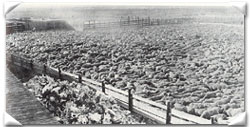
 Sheep have been a part of Saskatchewan’s economy for over 200 years, with the first sheep arriving on the Canadian prairies in the early 1800’s. While the sheep population has shifted with changing times in agriculture, Saskatchewan’s breeding flock is the fourth largest in the country.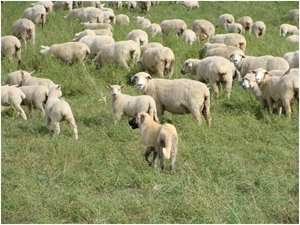
Sheep production is comprised of farm flocks, range flocks, and finishing operations with production spread throughout the province. Farm flocks range in size from 60 to 500 ewes, and generally market lambs which are fed to a finish weight of 110 pounds, the usual target weight for slaughter lamb in Canada. Range flocks are generally larger, and tend to be concentrated in the southwest where large flocks of 500 to 1200 ewes can be found grazing on short-grass prairie.
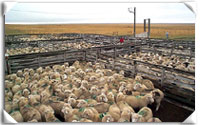 Saskatchewan enjoys a relatively low cost of production. Lamb makes it way to various markets via order buyers, feedlots and public auctions such as the large sales in Moose Jaw, Saskatoon and Yorkton, or through the assembly service of the Saskatchewan Sheep Development board.
Prices for Saskatchewan slaughter lamb maintained a steady and strong market in the last several years with all indicators pointing to a continued strong market. Shrinking sheep inventories outside Canada and North America also point to a strong future in lamb production. Sheep production remains a viable low-cost alternative within sustainable agriculture. A relatively low cost of entry, a higher biological efficiency (more than 1 offspring), and additional income opportunity areas such as wool and dairy make sheep production more attractive. In addition, sheep are a positive ecological grazing control, where they are used to manage weeds such as leafy spurge and others found in emerging reseeded forests. The stocking rate or density for pasture grazing is 5 sheep for every one cow. While the consumption of lamb is relatively low in Canada (approximately 1 kg per year), the opportunity to increase market share in North America is two-fold. Saskatchewan and Canadian lamb is more desirable than products imported and our growing population of traditional lamb-eaters provides a ready-made consumer market. 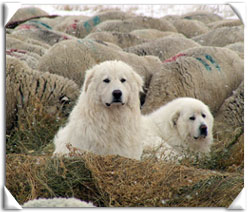 Sheep production is not without it’s challenges, including predator problems and the need to reach economies of size to supply markets on a continual basis. In addition sheep are sometimes overlooked as an opportunity in agriculture, a factor which has been slowly addressed in recent years. Saskatchewan Sheep Development Board (SSDB) with its office in Saskatoon, has the provincial mandate for industry development and is considered the voice of the industry. With five board members elected from five regions across the province, the SSDB administers a levy with funds from ID tag sales which support market development, promotion, extension and producer seminars. Other activity includes liaison with government departments, prioritizing research needs, and other public relation activities. The Saskatchewan sheep industry provides a huge growth opportunity for the province. Individuals interested in the industry are encouraged to contact the Saskatchewan Sheep Development Board. The Saskatchewan Sheep Development Board works with the following organizations to further support our industry: Saskatchewan Sheep Breeders Association Canadian Sheep Federation Canadian Co-operative Wool Growers Canadian Sheep Breeders Association